



Secure software before it reaches your client.
Our analysts review the code and the components your software uses. They tell your team what to fix first and check every fix.
What secure development is
A security flaw that reaches your client can cost a contract and weeks of rework. Secure development, or DevSecOps, means reviewing the code and third-party components before each release and fixing what carries risk. Hegeon runs that review, ranks the flaws by business risk and checks every fix with a retest.
The industry name DevSecOps joins security (Sec) with development (Dev) and operations (Ops).
The services in this practice
The Code X-ray is the most common starting point. It ends with a proposal for ongoing follow-up.
- 2 to 3 weeksGood place to start
Code X-ray
Our analysts examine the code, the dependencies and the delivery pipeline of your most critical systems. You receive the flaws in order of priority and the remediation plan.
Fixed price quoted within 1 business day
- Ongoing
Monitored secure pipeline
Every new version goes through the checks before reaching production. An assigned analyst triages the findings, guides the fix and retests it.
- Scoped
Application penetration test
A penetration test (pentest) is a controlled attack: an analyst attacks the application, with written authorization, to find the flaws an intruder would use. Scope and timeline go in the proposal.
What you receive
Every deliverable is recorded on the platform, with a date.
- An executive report written for the board.
- A list of flaws ranked by business risk.
- A software bill of materials (SBOM), in the format clients usually ask for.
- A remediation plan with owners and deadlines.
- A retest of each fix, with the result recorded.
How the work happens
Assessment
The analyst maps your repositories, delivery pipeline and the tools your team already uses.
You receive: a picture of your systems and the most urgent risks.
Prioritized plan
The analyst chooses with you the most critical systems to start with.
You receive: the plan with the order of work and the dates.
Execution by our analysts
The analyst turns on the checks in the pipeline, triages findings and guides the fix.
You receive: triaged findings and remediation guidance for each one.
Continuous monitoring
Every new version goes through the checks before reaching production.
You receive: a warning when a version brings a new problem.
Executive report
The cycle closes with the board report and an updated component list.
You receive: the report and dated evidence.
Who does the work
A team of experienced, certified application security analysts. Each project has an assigned analyst who talks directly to your team.
- The assigned analyst follows the project from assessment to report.
- Every check, finding and retest is recorded on the platform, with a date.
- Your team sees the same dashboard the analyst uses.
The résumés and certifications of the assigned team are presented in the proposal.
Why Hegeon
What you get in every contract, from day one.
- An assigned analyst. Each project has an analyst who answers for the work from start to finish.
- Dated evidence. Every finding, fix and piece of evidence is recorded on our platform, with the date it happened.
- A deliverable at every step. You know what you receive in each of the five steps of the method.
- A report for the board. The executive report explains risk in business terms.
On the platform
The application security dashboard shows findings, repository coverage and team maturity on the OWASP SAMM model, with next steps.
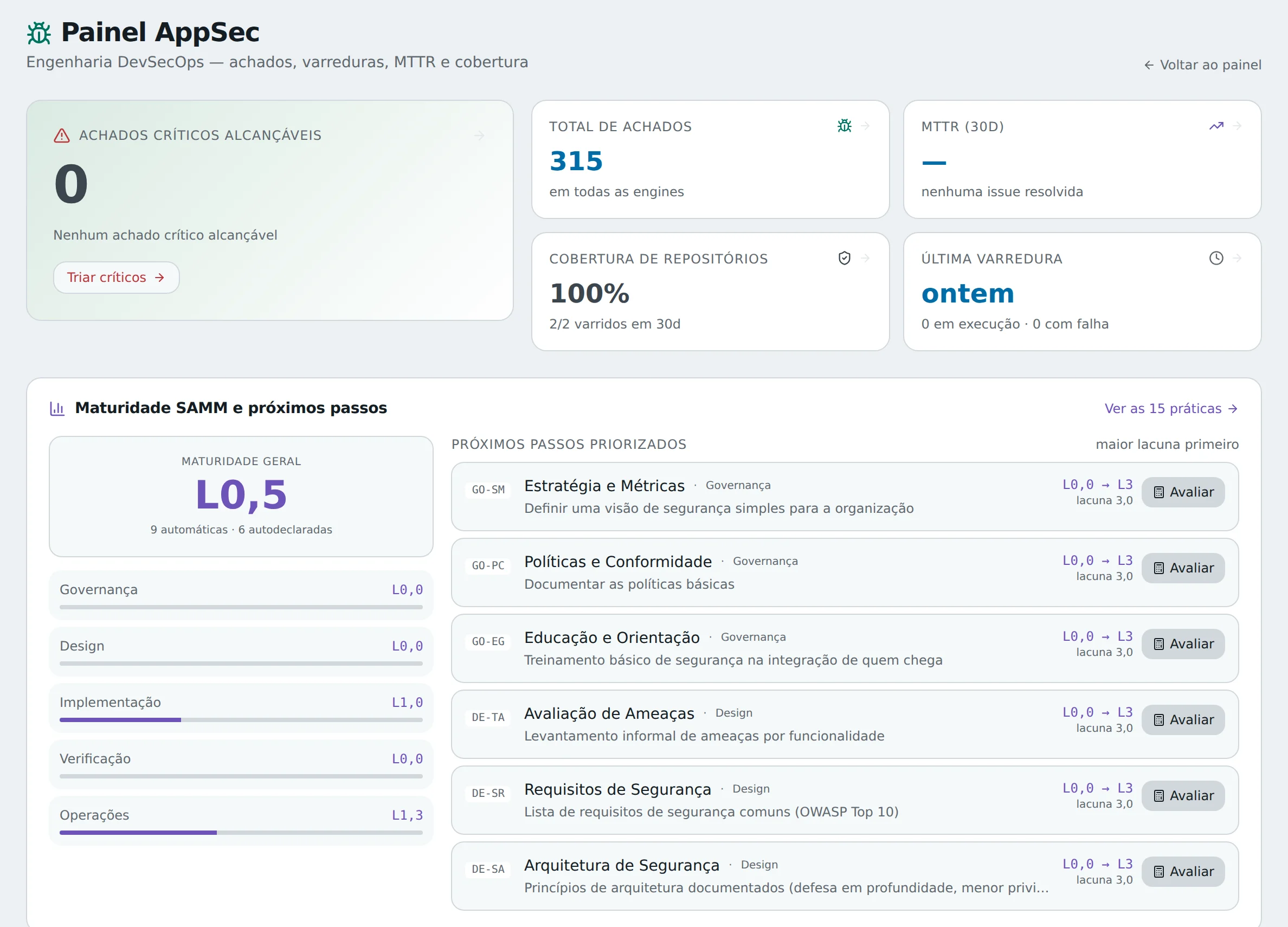
- The application security dashboard, with the critical findings an attacker can reach.
- Total findings and the average time to fix.
- Team maturity on the OWASP SAMM model, with next steps.
How to hire us
Every contract starts with a fixed project. It ends with a proposal for an ongoing service, if that makes sense for you.
- Fixed project
- Scope, timeline and price agreed before we start. It takes 2 to 4 weeks and ends with the report and the plan.
- Ongoing service
- An assigned analyst looks after your environment every month, with a monthly report and evidence on the platform.
Frequently asked questions
What is DevSecOps?
It is the technical name for building security into the daily work of software teams. Checks run with the delivery of each version, so problems show up before they reach your client.
Do we need to replace the tools we already use?
No need. The platform reads the output of the most common code and dependency analysis tools (SARIF and CycloneDX formats, among others), and the analyst works from them.
Which languages does the code analysis cover?
The platform’s own rules cover 14 languages. The specialist confirms coverage for your case in the first conversation.
Can we show the report to our client?
Yes. The executive report is written for non-technical readers and carries the date of every check.
What is an SBOM?
An SBOM (software bill of materials) is the list of third-party components your software uses, with versions. The platform generates it in CycloneDX, the format most often required in contracts.
How long does the Code X-Ray take?
Two to three weeks. In that time, our analysts examine the code, the dependencies and the delivery pipeline of your most critical systems. At the end, your company receives the flaws in priority order and a fix plan, with a proposal for ongoing support if you want to continue.
What is the difference between a pentest and code analysis?
Code analysis reads the software from the inside and points to the line where the flaw is. A pentest attacks the running application, in a controlled way and with written authorization, as an intruder would. The two complement each other: analysis follows every release, and the pentest shows what an attacker can exploit.
Is an application pentest a red team exercise?
It is the part of red teaming that fits a project: an authorised attack simulation, with a defined scope and timeline, against the application you choose. A continuous red team operation, which also tests people and processes over months, is a different kind of contract. The specialist recommends the right format for your case in the first conversation.
Talk to a specialist for 30 minutes.
Tell us what your company needs. You leave the call with three priorities for your environment.
Prefer to write? Use the email contato@hegeon.com.br.